
Maintaining a breathtaking property requires far more than weekend mowing and planting seasonal flowers. True exterior beauty relies heavily on the health, stability, and integrity of the underlying infrastructure that frames your landscape. When structural elements—such as underground utilities, stone flatwork, asphalt driveways, and deep tree roots—are neglected, even the most lush green grass and vibrant garden beds quickly lose their luster. Sunken concrete walkways present safety hazards, broken sprinkler lines turn pristine lawns into muddy swamps, and overgrown tree canopies choke out the light needed for turfgrass to thrive.
By taking a holistic approach to property care, you can bridge the gap between heavy-duty site maintenance and refined landscape design. Taking care of your exterior structures ensures that your investment in softscaping remains protected, safe, and beautiful year-round. This detailed guide covers actionable strategies to manage your home’s exterior skeleton, blending utility maintenance with high-impact cosmetic upgrades.
Strategic Pruning, Crown Thinning, and Sub-Surface Root Clearance
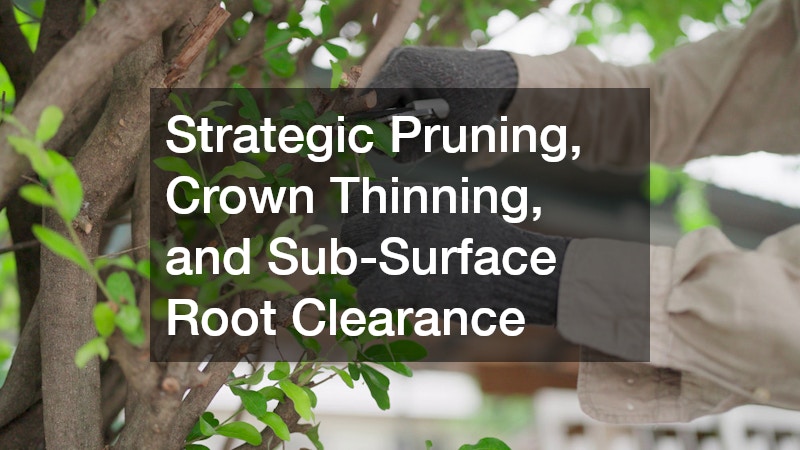
Trees serve as magnificent focal points in any residential landscape, providing shade, privacy, and natural character. However, without proactive management, heavy branches and expansive root systems can turn from landscape assets into expensive structural hazards. Strategic tree care focuses on balancing the health of the tree with the safety and aesthetic needs of the surrounding property.
Proper canopy management is the first step toward optimizing both safety and curb appeal. As trees grow, their upper foliage often becomes dense, blocking sunlight from reaching the lawn and garden beds beneath. This lack of light leads to thin, patchy turf that easily succumbs to soil erosion and weed invasion.
- Crown Thinning: Strategic removal of interior branches increases light penetration and air circulation throughout the canopy. This reduces wind resistance during heavy storms and allows crucial sunlight to nourish ground-level vegetation.
- Structural Lifting: Trimming lower branches clears sightlines across your property, creating an open, welcoming look while preventing low-hanging limbs from interfering with lawn mowers or pedestrians.
- Root Shielding: Large, invasive roots can uplift nearby pavers, crack foundations, and damage underground lines. Installing physical root barriers forces aggressive root growth downward rather than laterally across flatwork.
- Deadwood Removal: Eliminating brittle, diseased limbs before heavy winds drop them onto structural features or manicured lawn zones.
- Hazard Assessment: Identifying structural defects like co-dominant stems or internal rot to protect surrounding property.
- Soil Decompaction: Using air-spading around the root flare to relieve soil pressure and encourage health without damaging feeder roots.
When dealing with large oak, pine, or maple trees, DIY trimming carries significant risk to both personal safety and tree health. Bringing in accredited local tree services ensures that large limbs are removed safely using professional rigging techniques without dropping heavy wood onto manicured lawns or structural features. Expert arborists can also diagnose subtle fungal infections or structural internal decay before a major branch snaps during a storm.
Sometimes, a tree is simply too diseased, damaged, or poorly positioned to remain on the property. Simply cutting a tree down to its base leaves behind an unsightly biological liability. Professional stump grinding services remove the remaining wood below the soil surface, destroying the subterranean core. Removing the stump prevents destructive wood-rotting fungi from spreading to healthy trees, stops carpenter ants from nesting, and instantly creates a clean, level surface ready for fresh topsoil, sod, or hardscape extension.
Calibrating Seasonal Moisture and Balancing Soil Chemistry
A striking, vibrant lawn is the foundation of high-end landscape aesthetics. Achieving a uniform, carpet-like turf requires a fine balance of subterranean soil nutrients and precise moisture application. When either side of this equation is off-balance, grass becomes discolored, thin, and prone to disease infestation.
Soil health is a dynamic ecosystem that changes with temperature, rainfall, and grass species. Over time, heavy rain and foot traffic compress soil particles, stripping the root zone of necessary oxygen and preventing moisture penetration. Applying the correct mixture of macro-nutrients—nitrogen, phosphorus, and potassium—fuels strong root development and rich chlorophyll production.
- Seasonal Soil Testing: Analyzing soil pH levels ensures that nutrients can actually be absorbed by grass roots. Acidic soil may require agricultural lime, while highly alkaline soil needs sulfur applications.
- Core Aeration: Pulling small plugs of soil out of compacted lawns relieves surface pressure, allowing water, fertilizer, and air to reach deep into the root zone.
- Pre-Emergent Weed Control: Applying weed barriers early in the spring blocks crabgrass and dandelion seeds from taking root, preserving valuable soil moisture for target grass species.
- Smart Controller Upgrades: Installing weather-sensing irrigation timers that automatically adjust watering durations based on real-time rainfall data.
- Targeted Overseeding: Introducing resilient turf varieties into thinned areas to establish dense grass cover that naturally suppresses weed growth.
- Backflow Assembly Testing: Checking pressure valves annually to prevent stagnant irrigation water from siphoning back into clean supply lines.
Maintaining this delicate chemical balance requires consistency and specialized equipment. Working with a dedicated lawn care fertilizer and weed control company ensures your yard receives customized treatments tailored specifically to your soil type and local climatic shifts. Professional technicians apply slow-release granular blends and spot-treat broadleaf weeds before they can spread seeds across your turf.
Even perfectly balanced soil will wither without regular, uniform watering. Underground sprinkler systems offer hands-free lawn hydration, but mechanical parts inevitably wear out, clog, or misalign over time. A broken sprinkler head spraying continuously against a house foundation can cause structural soil shifting, while a clogged nozzle leaves dry, brown circles across an otherwise green lawn.
Promptly scheduling irrigation system repair prevents water waste, lowers monthly utility bills, and stops pooling water from drowning turf roots. Technicians adjust spray trajectories, repair broken subterranean lateral lines, and calibrate backflow preventers to ensure every square foot of your lawn receives exact moisture levels.
Sealing Spall Cracks, Mudjacking Slabs, and Preserving Walkway Lines
Concrete flatwork forms the structural pathways, patios, and structural retainers that organize your outdoor space into functional living zones. Over time, environmental factors like soil settling, tree root expansion, and freeze-thaw cycles cause concrete to shift, crack, and discolor. Addressing these surface defects quickly keeps your property looking tidy and prevents major structural failures down the road.
When moisture seeps into micro-cracks in concrete and freezes, it expands, chipping away at the aggregate material—a process known as spalling. Left unsealed, small hairline fissures grow into wide gaps that trap dirt, host persistent weeds, and create tripping hazards for visitors.
- Polyurethane Expansion Joints: Filling movement joints with flexible, weather-resistant sealant stops water from pooling under concrete slabs, preventing sub-base erosion.
- Slab Leveling (Mudjacking/Polyjacking): Instead of tearing up sunken patio slabs, specialized foam or slurry can be injected beneath the concrete to gently raise it back to its original level grade.
- Decorative Resurfacing: Applying a thin acrylic polymer overlay transforms dull, discolored concrete into a textured, slip-resistant surface that mimics high-end natural stone or slate.
- Deep Crack Injection: Filling wide structural fissures with epoxy or polyurethane foam to block water infiltration down to the aggregate sub-base.
- Edge Restraint Installation: Securing outer paver boundaries with heavy-duty plastic or concrete borders to prevent lateral drifting over time.
- Penetrating Silane Sealing: Applying breathable water-repellent sealers that prevent moisture absorption without altering the natural stone or concrete finish.
For minor cosmetic touch-ups, home supply kits offer quick temporary fixes. However, major structural repairs require specialized machinery and deep material knowledge. Sourcing complete concrete services guarantees that structural cracks are structurally bonded, proper expansion joints are cut, and surface sealants are applied uniformly for long-term protection against harsh weather.
When expanding outdoor living spaces or replacing severely deteriorated hardscapes, working alongside experienced local concrete contractors ensures your new installation is built on a solid foundation. Experienced installers properly grade the underlying sub-base, reinforce concrete slabs with steel rebar grids, and design subtle drainage slopes that route water safely away from your home’s foundation walls.
Edge-Banding, Sub-Base Compaction, and High-Grade Sealcoating
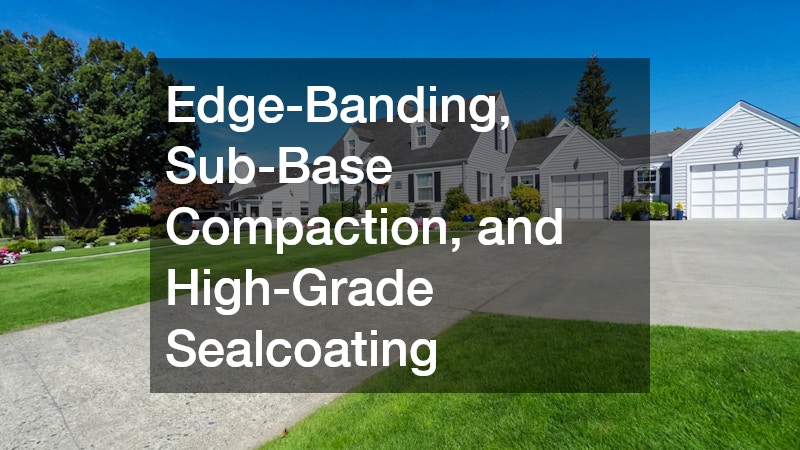
Your driveway is often the single largest hardscape element visible from the street, making it a key component of your home’s overall curb appeal. A dark, smooth, well-defined driveway frames your lawn, highlighting surrounding garden beds and architectural features. Conversely, a crumbling asphalt surface with jagged edges instantly lowers property appeal, regardless of how well-kept the grass may be.
Asphalt is a flexible material composed of stone aggregate bound together by liquid asphalt cement. Over time, exposure to solar ultraviolet rays oxidizes the asphalt binder, changing its color from rich black to dull gray while making the surface brittle and susceptible to cracking.
- Sub-Base Compaction: A long-lasting asphalt driveway requires a heavily compacted crushed-stone base. Without proper base preparation, vehicle weight quickly causes rutting and depressions.
- Edge-Banding and Curbing: Installing concrete, stone, or paver borders along asphalt edges protects the fragile sides of the driveway from crumbling under tires while creating a sharp, high-contrast visual border.
- Infrared Patching: Infrared heating technology melts damaged asphalt in place, allowing seamless blending of new material into existing pavements without leaving unsightly structural seams.
- Hot Rubberized Crack Filling: Sealing active pavement cracks with elastic hot-pour rubber to prevent water from penetrating during winter freeze cycles.
- Asphalt Sealcoating: Coating asphalt every two to three years with a protective emulsion barrier to block harmful solar rays and oil stains.
- Swale and Slope Grading: Reshaping asphalt perimeters to route heavy rainwater runoff away from driveway edges and adjoining home foundations.
When your driveway displays widespread alligator cracking or extensive surface unraveling, standard patching techniques are no longer sufficient. Hiring professional driveway paving services allows you to evaluate whether a full asphalt overlay or a total depth reconstruction is necessary to restore structural stability and visual appeal.
Partnering with a reliable paving company ensures that hot-mix asphalt is applied at correct temperatures, rolled to optimal density, and properly sloped to shed rainwater efficiently. Applying a protective sealcoat 12 to 18 months after initial installation shields the asphalt from oil drips, road salt, and harsh sunlight, extending the driveway’s lifespan by decades while keeping it looking brand new.
Monitoring Drainfields, Root Shielding, and Subsurface Water Flow
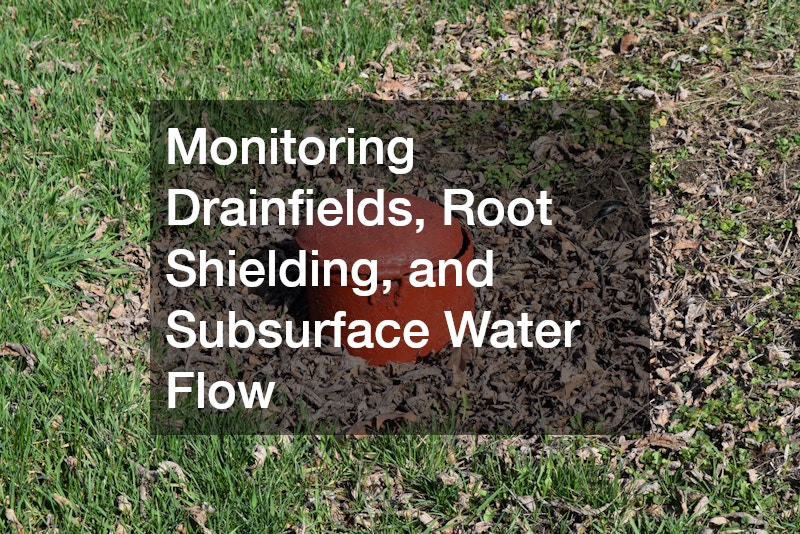
Off-grid wastewater treatment systems play a vital, hidden role in keeping properties healthy and appealing. A failing subterranean septic system poses serious health risks and can completely destroy the aesthetics of your yard. Underground pipe failures or tank overflows saturate lawn soils with untreated effluent, creating bad odors, soggy ground, and toxic conditions for plants.
The primary component of a residential septic system is the drainfield—a network of perforated pipes buried beneath the lawn that allows liquid wastewater to filter safely through gravel and soil layers. Protecting this underground area requires strict management of what goes down household drains and what happens on the lawn above.
- Protecting Drainfield Surfaces: Never park heavy vehicles, build structures, or place heavy garden features over the drainfield to prevent crushing underground pipes and compacting the soil filter.
- Managing Shallow Vegetation: Plant only shallow-rooted turfgrass over the absorption field. Deep-rooted shrubs and trees should be planted far away to prevent roots from invading subterranean distribution pipes.
- Diverting Surface Runoff: Ensure roof gutter downspouts and patio drainage systems discharge away from the drainfield to prevent saturating the soil with excess rainwater.
- Effluent Filter Maintenance: Cleaning the outlet baffle filter annually to stop suspended solids from clogging downstream drainfield gravel beds.
- Inspection Risers Installation: Elevating access ports to ground level for easier routine monitoring and pump-out access without tearing up turf.
- Bacterial Additive Management: Maintaining active biological cultures within the tank to break down organic waste solids before liquid discharge.
Preventing underground backups requires regular maintenance of the primary containment tank. Scheduling routine septic tank cleaning removes floating scum layers and trapped grease, preventing non-dissolved solids from flowing out into the drainfield and clogging the porous soil.
Additionally, hiring a certified septic tank pumping service every 3 to 5 years removes heavy settled sludge from the tank floor. Regular pumping keeps the system operating at peak efficiency, preventing toxic wastewater from backing up into your home or leaking onto your lawn. Proper maintenance keeps your grass green, dry, and safe for outdoor activities.
Every element of your home’s exterior—from high tree branches down to underground utility lines—works together to create an inviting visual impression. By addressing structural vulnerabilities early, you build a durable foundation that showcases your landscape at its very best. Investing in routine hardscape maintenance, structural tree care, accurate soil conditioning, and hidden utility management protects your property value and elevates your home’s curb appeal for years to come.